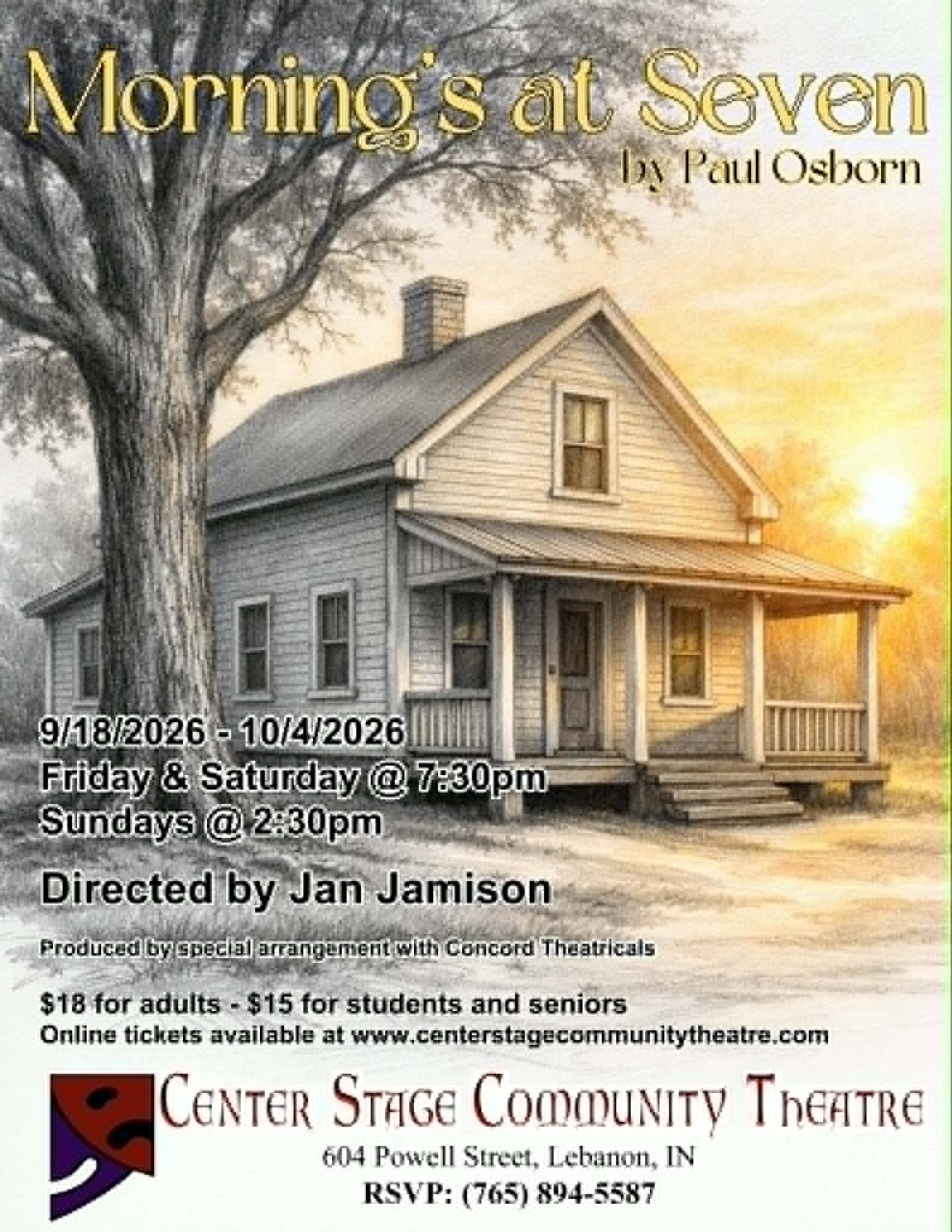
Morning's At Seven
Presented by
Center Stage Community Theatre
From the gentle eccentricities of four elderly sisters and their husbands, Paul Osborn has created a charming, vivid comedy about life in small-town America in 1922 - when families could continue a lifetime's conversation across a backyard fence. The play's unlikely catalyst is Homer Bolton, the awkward 40-year-old son of Ida and Carl. Shy, simple-minded, and still devoted to his mother, Homer brings his girlfriend home to meet the family for the first time - after 12 years of courtship. With this belated step toward the altar, he unintentionally stirs old passions and creates assorted new anxieties in the lives of everyone around him: in his mother, confused by her attachment to her son and her desire to see him get married; in his father, given to "spells" of melancholy and vague remorse; in the furtive Aunt Cora, who is determined to have the life she feels has been denied her; in the steady Uncle Thor, and in the spinster Aunt Arry who lives with them, clinging to an old secret which is her last defense against the threat of change; and in the rebellious Aunt Esty and the stuffy Uncle David, who has little patience with the simple concerns of his wife's family. Morning's at Seven is warm and funny, a sly, oddball, glitteringly stylized slant on life, as delightful today as it was when it was first produced in 1939.